
Electrolyte and high-purity vanadium precursors for flow battery energy storage.
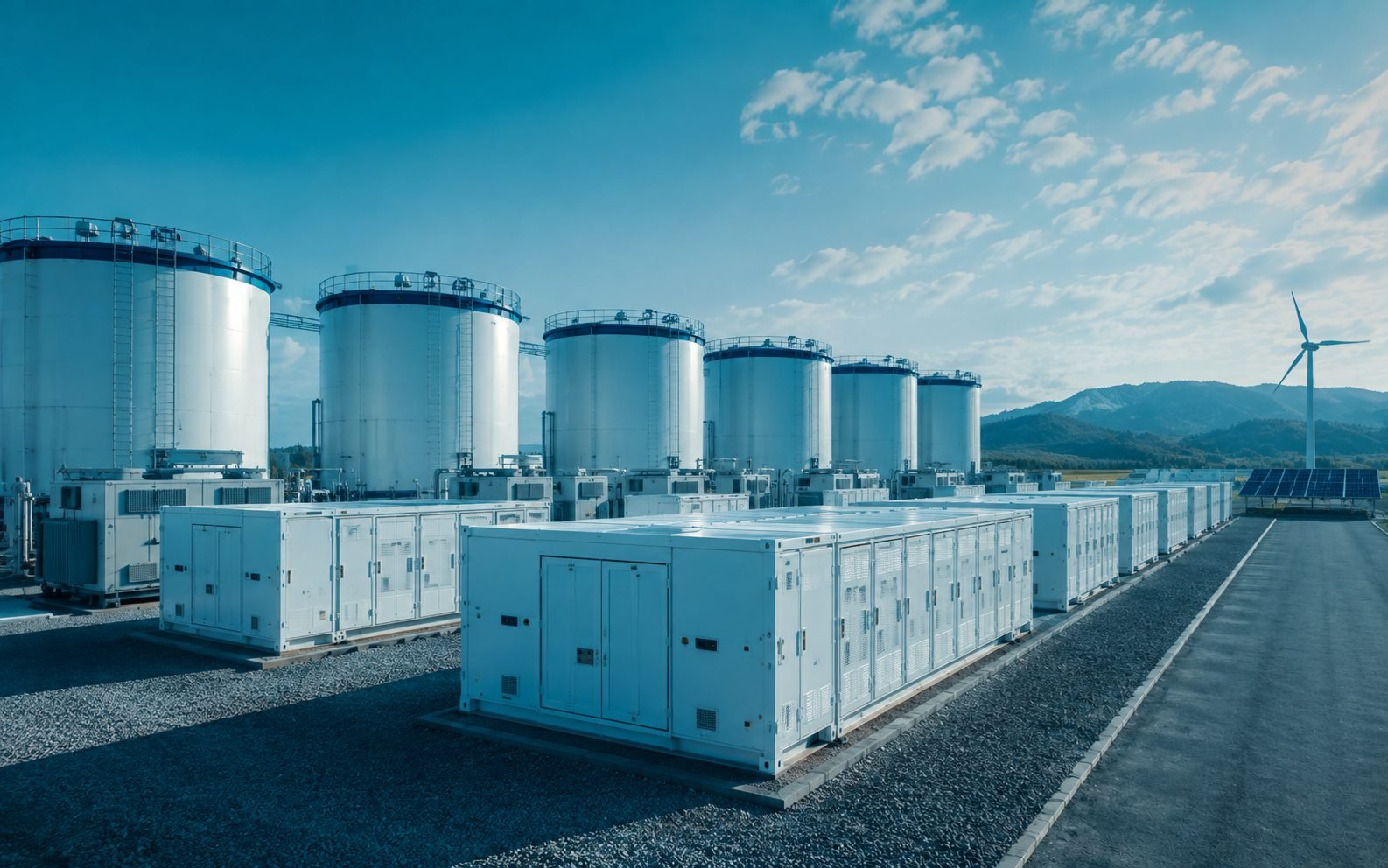
Vanadium redox flow batteries store energy in two tanks of vanadium electrolyte rather than in solid electrodes. Because the same element is used on both sides in different oxidation states, cross-contamination across the membrane does not permanently degrade the system — a limitation that constrains most competing flow chemistries.
Power and energy scale independently: stack size sets power, tank volume sets duration. That makes the technology well suited to long-duration grid storage paired with renewable generation.
Electrolyte quality is the dominant variable in cycle life. Trace metals catalyse side reactions and precipitation, and because the electrolyte is a long-lived asset rather than a consumable, the cost of contamination compounds over the system's life.
Vanadium is the energy storage medium itself, cycling between oxidation states. Purity is not a specification detail here — it directly determines how many cycles the installed asset delivers.